Art Writing in the Wild
criticism (forthcoming)
Art writing is the work of a trickster.
I mean the craft of re-searching and re-telling stories about art requires a certain maneuver, deliberately divergent like a spirit of trickster. If you walk deep into the margins of any culture, you will find this archetype roams (most likely) around liminal spaces where unconfined spirits are treated as wealth.
Tricksters are witty and mischievous. They could be tuktuk drivers who give you a quick overview of Bangkok city, and drop you somewhere you don’t even ask for. They could be your grandpa and your grandma who have all the time in the world. They lure you with some sweets, and tell you a series of uncanny stories about mythical creatures and obscure places. You know that you couldn’t care less, yet much later did you realise what those events really meant. Sometimes, you feel dumbfounded. Other times, you are agitated. Their ways of playing give you eerie sensations, whether you like it or not, the spirit of trickers stirs something inside you.
No, I’m not saying all art writings are made out of the trickster’s playbook — they don’t have to. In the art space, textual materials work in layers of purpose. I’m not concerned about standardised texts, like exhibition statements, press releases, work lists, etc. for they know exactly why they’re right there and what they’re supposed to do. (Well, not entirely true now, some critics started observing, through the rise of AI slop, textual materials getting more and more meaningless – as Andrew Berardini called: technically sophisticated, semantically hollow.) I’m here wandering after the writings that seep between the cracks of space they can’t properly integrate — and perhaps, never will. I see this type of writing to diffuse the plot, how you really want to ride with art will determine your relational positions with them.
Bibliosentience
II. Rooting into the Subterranean
essay (2026)
Bibliosentience is a contrapuntal writing project about the archival gap, unfolding in two pieces. The first one, Tilling for alive intelligence (published in […] ellipses: Unlearning Intelligence) challenges the techno-messianic narrative and symbolic order of artificial intelligence as an apex of knowing — asking what kinds of value, system, and perception have already been built upon — and come to define the frontier of ‘intelligence.’ The research sketches a scene of alive intelligence with an initiation for future discussion. The second piece: Rooting into the Subterranean (forthcoming), excavates the hidden yet powerful grounds of knowledge and knowing beyond the semantic realm. The research contests the extractive logic of data mining and extends an inquiry toward sensory and intuitive capacities — asking what visual-spatial intelligence might become if we could be open to receive memories from the richness of the subterranean terrain.
The term ‘bibliosentience’ is a neologism to describe a space where world memories, that exceed what data-technology can archive or access, survive to be fully told and transmitted. The research draws upon the audacious imagination of historical and ongoing scientific experiments (whether they failed or flourished), including literary and anthropological works.
Bibliosentience
I. Tilling for alive intelligence
essay (2026)
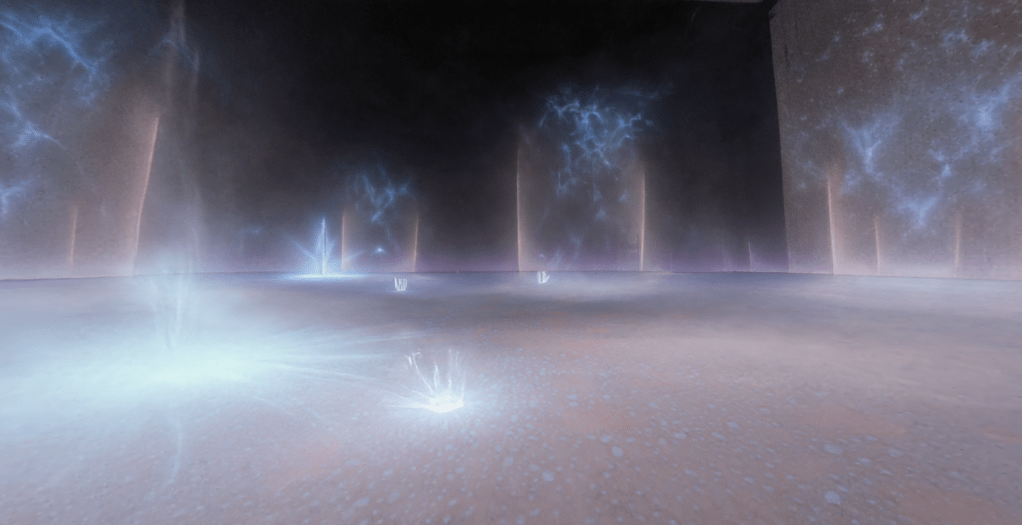
Bibliosentience is a contrapuntal writing project about the archival gap, unfolding in two pieces. The first one, Tilling for alive intelligence (published in […] ellipses: Unlearning Intelligence) challenges the techno-messianic narrative and symbolic order of artificial intelligence as an apex of knowing — asking what kinds of value, system, and perception have already been built upon — and come to define the frontier of ‘intelligence.’ The research sketches a scene of alive intelligence with an initiation for future discussion. The second piece: Rooting into the Subterranean (forthcoming), excavates the hidden yet powerful grounds of knowledge and knowing beyond the semantic realm. The research contests the extractive logic of data mining and extends an inquiry toward sensory and intuitive capacities — asking what visual-spatial intelligence might become if we could be open to receive memories from the richness of the subterranean terrain.
The term ‘bibliosentience’ is a neologism to describe a space where world memories, that exceed what data-technology can archive or access, survive to be fully told and transmitted. The research draws upon the audacious imagination of historical and ongoing scientific experiments (whether they failed or flourished), including literary and anthropological works.
Tilling for alive intelligence is structured into INTRO: The Legend of the Smart Arse; PART 1: The Fiction of Singular Reality, and The Folklore of the Machine; PART 2: The Blind Keepers and The World Storytellers
A year before I coined the term ‘bibliosentience,’ I reunited with my childhood love of science while being reminded, in the same breath, of why I had abandoned it during my teenage years. It was never science that repelled me. It was those who speak about science as though they are science — claiming reality, fact, proof, measurement in the coldest, most rigid of manners. Their austere expressions were synonymous with rigour, and their rigour synonymous with truth, and it was as though ‘the only truth’ that one could hold in a measuring cup. If that’s the case, my measuring cup must severely be leaking.
But is this really the spirit of science — or even of intellectual integrity? Or, is it merely a poverty of imagination in disguise?
On 12 January 2013, Rupert Sheldrake was invited to give a talk at TEDx Whitechapel — an event explicitly titled Visions for Transition: Challenging Existing Paradigms and Redefining Values. In his talk, named after his book The Science Delusion, Sheldrake openly challenged the scientific dogma that most ‘educated people’ all over the world uphold as settled truth. In his own words, this dogma rests on several foundational assumptions. First they believe in nature’s mechanical or machine-like nature. The universe is like a machine. Animals and plants are like machines. We’re like machines. In fact, ‘we are machines.’ ‘We are lumbering robots,’ in Richard Dawkin’s vivid phrase. With a brain that is a genetically programmed computer. Second, matter is unconscious. The whole universe is made up of unconscious matter. There is no consciousness in stars, in galaxies, in planets, in animals, in plants. He pointed to ‘a conflict in the heart of science’ between science as a method of inquiry based on reason, evidence, hypothesis and collective investigation, and science as a belief system or a worldview.
The spirit of science in Sheldrake’s term is alive intelligence. In this kind of world, I believe, one can watch the sky winking back to them. Isn’t this also the spirit of art? I imagine a mad scientist and a relentless artist (these titles didn’t even exist until modern time, right?) shared the same laboratory, wandered in their audacious imagination, inquired into what seemed unreasonable, and experimented as though they had a whole lifetime to fail.
(5528 words)
An Ode to the Cadaver
script (2025)
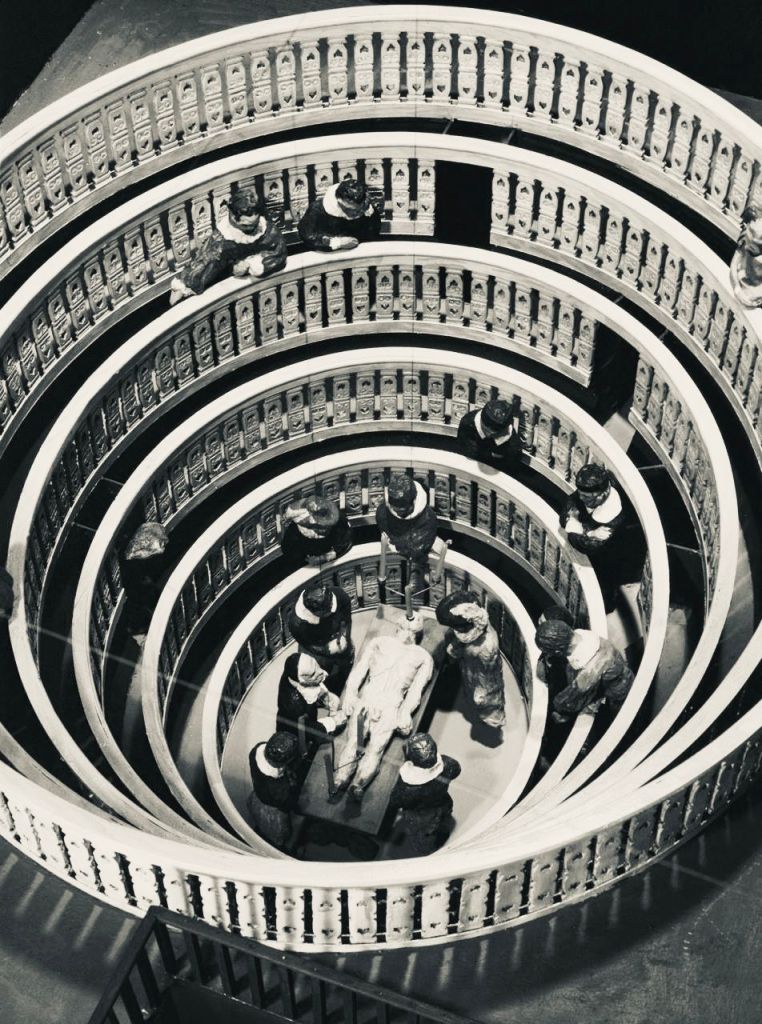
The lintel inscription of the Anatomical Theatre at the Università degli Studi di Padova reads: MORS VBI GAVDET SVCCVRRERE VITAE or Where death rejoices to help life.
But – how exactly life and death collaborated? Inside stands a pedagogical structure where the eyes meet the hands, craft entwines science, so that the living may follow the light falling upon a cut-open body. Anatomical theatres were designed to allow the trainees to see the dissection and hear the professor’s commentary, so they were chambers of concentration as much as of spectacle. These dead pedagogues were typically executed criminals or unclaimed individuals whose death rejoiced life through the method of dissection and taxonomy-driven description, and that the canons were forged and have become the dominant discourse on the anatomical body that endures to this day.
An Ode to the Cadavers is a reading score to revisit a double ritual of anatomical theatres: the ‘profane’ ritual of scientific knowledge on the body and the ‘sacred’ ritual’ for those who regard the human form as a divine image. It first questions basic assumptions of the body and asks what might have slipped away under the light of the empirical method? How did the act of looking and of naming participate in constituting the canons on the anatomical body as we understand it today?
Beyond the historical reverberation of Anatomical Theatre in the present time, An Ode to the Cadavers addresses a shared politics of bodily erasure that persists in contemporary culture – a continuum that stretches from the purely mechanical body to the sanitised spiritual body. As biomedical reductionism and marketised spirituality draw from extractive epistemologies that translate bodies into data, images, or consumable affects, the reading score is an attempt to invite stories of what has actually been occluded.
Marginalia on ‘Incubation’
(who tends to words that tend to art?)
criticism (2025)
Critics need more than a platform. They need conversations — someone who talks back and dwells with the text. Despite claiming to ‘redefine the role of art criticism in the digital era,’ the project amounted to little more than routine descriptions of artworks — too inert to provoke, let alone redefine, anything. […] How about a critic starts asking: what does it mean to continue to write art criticism in THIS ERA if it simply generates a descriptive, derivative text, in the way GenAI could tirelessly produce? What is the point of writing in this time if words don’t breathe, tremble, stutter, in the manner that only living organisms can do?
[…]
To tend to the practice of art criticism, it needs time for discernment through ways of looking inward–outward, of thinking back–ahead. Without generosity of time, art critics cannot prosper.
Just like the meme satirises how people broadcast the man, while keeping him stranded on the barren island as ‘content’, the absence of art criticism is a familiar lament in many parts of the world, yet scarcely given the close, patient attention the practice needs to take root.
(1137 words)
criticism (2025)
Art experience often occurs outside the semantic zone, like horror that exists at the edge of the utterable. A neat justification based on theoretical, sociopolitical, philosophical context is the secondary message—the weaving process of a critic. So I believe art proves its meaning when it invokes experiences that are incommensurable, in a way we can’t access elsewhere. Or perhaps, it disturbs what we think we know, unsettles our preconceptions, or urges us to revisit what we take for granted. In this very same sense, shouldn’t art criticism be a way to open a door for meanings, instead of restricting them?
[…]
A report on the place where one works and lives, to me, is also a binding gesture of a critic’s inner landscape — or ‘[sub]liminal zone‘ where lived experiences may reconfigure or fall apart. Though the contemporary exhibition readily adopts the rhetoric of ‘diversity,’ criticism seems to remain confined in a narrower circle. In this situation, why don’t critics continue reporting on how art is felt, understood, and spoken, however minor its impact may seem, until what we call ‘art criticism’ no longer mimics the old, singular formality, but instead creates from wherever a critic stands?
(3835 words)
♮hʌm fər həʊm
melodic memoir (2025)
This short writing (22 pages, images included) traces a long walk toward understanding what it means to arrive home after dealing with loss in all different names. It had cost me dearly to recognise what I’ve inherited: the unresolved emotions passed down through blood and bone. The first draft came out in one sitting — and I kept returning to revise it until the end of 2024. Somewhere in that slow process of writing and editing, I came to understand how the acts of remembering and reweaving could slowly unbind the weight of transgenerational memories unconsciously buried in the threads of grief, longing, and belonging. I also proposed ‘double negation’ as a kind of movement through the text which negates both the conventional and counter perception of what it means to be ‘liberated.’
Some say that once you experience one death, more deaths will visit you. Is it true?
On 7 June 2025, I received a phone call from my mum telling me that one of my cousins had committed suicide the night before. Her body was found. My mother knows I have been the only daughter in the family who talked about death since I was a little girl. She tends to assume I can handle such things.
I was about to go to bed. It was the night of the waxing moon in Scorpio, a full moon is just two days away.
How did she die?
I asked. She drove to a suburb of Bangkok. Parked the car, and smoked herself inside. She kept the phone numbers of two people in her pocket — planned for her body to be found. That’s all she left. The rest was unknown. Her mobile phone wiped clean.
“I was concerned about her, so I want to know why she killed herself,” my mum requested. I refused to help — and did not explain my reasons.
But – what really concerns my mum? And how would knowing the motive of my cousin help anything at all?
In the name of love and care, we claim the right to extract from someone else’s life — to compile our own version of who they are, rather than listen to them. Is it an act of care, or of appeasing our own anxiety before the unknown and the unknowable?
No one else can know the real why. That’s what she wanted.
I insisted to mum.
The real why is never a straight line, isn’t it?
A whole why cannot be found in literal reading.
After many years, that night I felt connected to her again.
A Confluence of THE THREE MERMAIDS
oral storytelling (2023-2025)

There is a little-known yet enigmatic story retold in Bangkok’s old riverside community — of an old woman who, in countless moons ago, encountered three mermaids right behind her apothecary. As I searched the official archives, I found zero evidence about the encounter. Instead, it has circulated orally amongst local people as a horror story, water monsters.
I then realised how the memory of ‘wonder’ has turned into ‘horror’ when humans cannot deal with ambiguous experiences, or perhaps, when we have lost our capacity for enchantment altogether. The archive, in this sense, is not a home for mythical beings, nor a dwelling place for those that escape empirical evidences.
A Confluence of the Three Mermaids is a collection of fragmented stories about the three mermaids with no attempt to consolidate the remains into proper writing. I choose to listen to the scream of the three mermaids buried underneath the narrative made by others. Listening by day, by night, I found the mermaids slowly migrating into a space where they are seen as they are, they can return their gaze, bear witness, and imparts their memories.
From that soft and silent space of reciprocity, the three mermaids scream no more. They serenade. And I become their sole witness — present, at last, to their real beauty.
A year later, I again pondered upon the myterious old woman. Someone pronounced her name. But it sounds made-up. Time goes, stories accumulate. Her image fades.
One night, I began to wonder — what if time runs into a full circle again? I would never find ‘that sole witness’ of the three mermaids because she is here. Now.
BOUNDLESS BODIES
anecdotes & antidotes
memoir (2019-2023)
A 5-chapter memoir: The Feet; The Sea; The Garden; The Dictionary; The Storyteller — for my father and the countless lives we both have touched and been touched by.
The term ‘Boundless Bodies’ first rhymed on my tongue in 2019. It was the period of contemplation on transgenerational and unresolved memories. This humble approach has since become the foundation of my work, for It has guided me to excavate what remains until it transforms anew.
[…] this writing starts from both of us and traverses many anecdotes, encounters, books, animals, and people whom you and/or I have met and engaged with in diverse forms of interaction. Apart from the act of remembering, this writing also serves as portals to relevant discourses based on lives enriched by perspectives and reflections to those who lived before you, beside us, or will live after me. So, here, I can only learn to speak while learning to keep silent, learn to write while hearing the unspoken.
 Judha Su